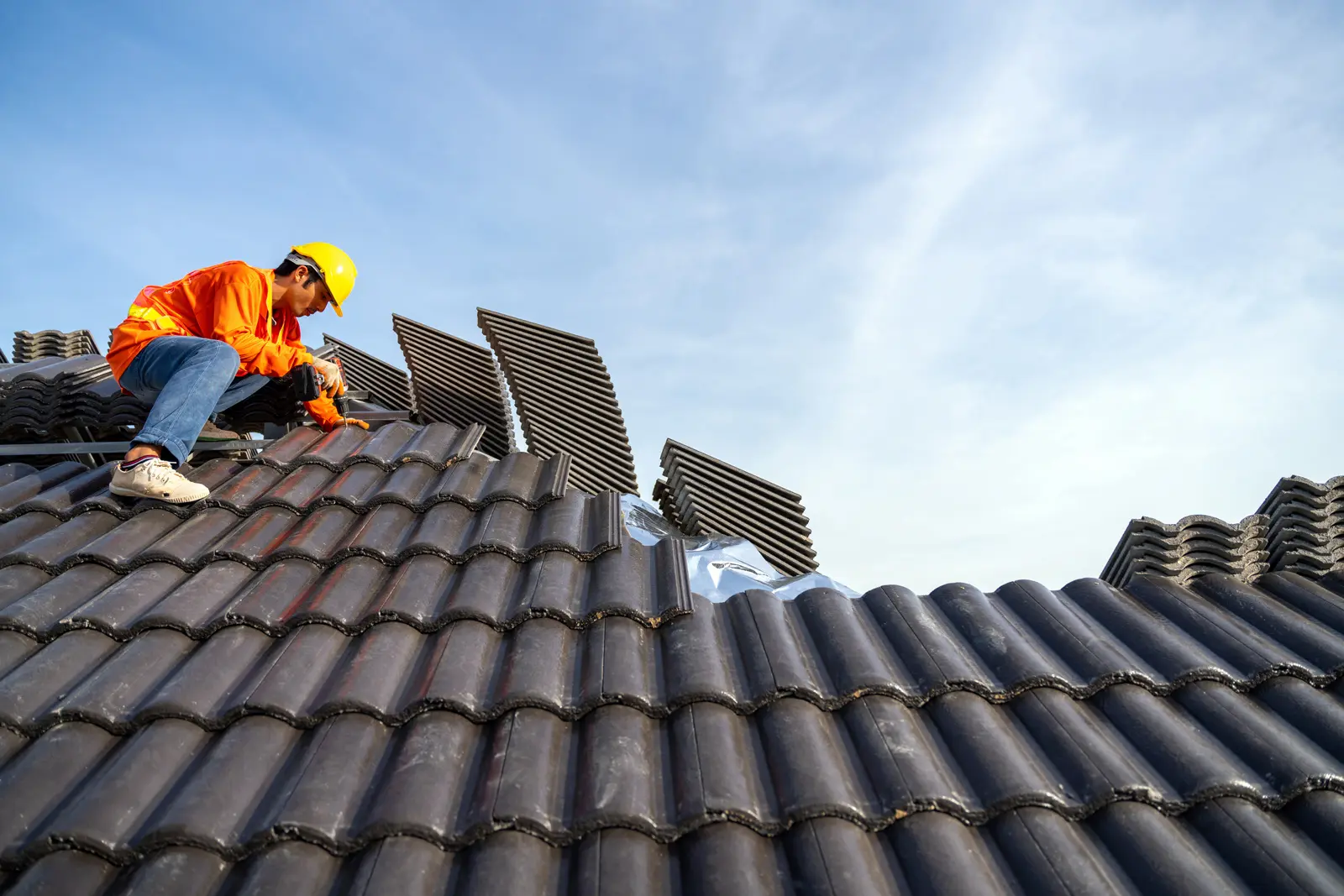
Lead Valley Repair on a 1930s Cork Terrace: What €2,850 Actually Bought
Cork's 1930s housing stock in Turner's Cross, the Lough, Glasheen, Blackpool and Greenmount is hitting the end of its lead valley life all at once. Roches Point recorded 1,084 mm of rainfall in 2024, 111% of the long-term average (Met Éireann, 2024). Every drop of it runs through these 90-year-old valleys. A lot of them are splitting.

Key Takeaways
- Roches Point logged 1,084 mm of rain in 2024, 111% of average (Met Éireann).
- A full code 5 valley on a 4-6m Cork terrace is €1,800-€3,200 inc. VAT.
- This Turner's Cross job was €2,850 + VAT over 5 working days.
- Patch a young split. Replace a 60-90 year valley with pinholes.
Why are 1930s Cork lead valleys failing now?
Roches Point recorded 1,084 mm of rainfall in 2024, 111% of the long-term average (Met Éireann, 2024). Code 4 lead used on 1925-1945 Cork terraces is now inside its 60-80 year end-of-life window. That is why so many Turner's Cross and Blackpool valleys are splitting at once.
The damp patch on your bedroom ceiling is probably not last week's storm. It is decades of slow fatigue catching up. Code 4 was the spec for most of that stock. We are in the middle of the replacement wave.
Three failure mechanisms run in parallel on every Cork code 4 valley.
- Thermal fatigue. Lead expands and contracts with every temperature cycle. Cork sees 30-50 freeze-thaw nights per winter. Over 90 years that is hundreds of thousands of micro-movements. Eventually a hairline crack appears along the centre line where the lead is stretched thinnest.
- Acidic erosion from moss runoff. Lichen and moss on slates above the valley produce mild acid runoff. Over decades it etches the lead surface and creates pinholes that are barely visible but leak steadily in heavy rain.
- Foot traffic damage. Chimney sweeps, satellite installers, and previous roofers have been walking on the lead. Soft code 4 dents easily. Dented lead does not drain. Water pools, the alloy work-hardens at the dent edge, then cracks.
Most of these failures are slow. The valley splits hairline first. Water runs onto the underlay. The underlay, typically bitumen felt, deteriorates over years. Eventually a wet rafter shows up as a brown ring on a bedroom ceiling. By the time the homeowner notices, the valley has typically been leaking for 12-24 months.
So what does a proper repair actually cost in 2026?
What does a Cork lead valley repair cost in 2026?
A spot-repair on a single split Cork valley is €380-€650. A full code 5 replacement on a typical 4-6m run is €1,800-€3,200 including the 13.5% VAT that applies to qualifying roofing supply-and-install work (Revenue Commissioners). Multi-valley reroofs on period terraces average €4,500-€7,500 because scaffold cost is shared.
Pricing below is from our 2026 County Cork callouts, VAT included. Listed buildings, conservation areas, and rear-of-terrace scaffold cases run 15-25% higher.
| Repair type | Cork price (2026, inc. VAT) | Timeline |
|---|---|---|
| Spot repair, single code 5 patch on one split | €380-€650 | 1 day |
| Full code 5 lead valley replacement (4-6m run) | €1,800-€3,200 | 5 days |
| GRP valley replacement (4-6m, concrete tile roof) | €1,200-€2,200 | 3-4 days |
| EPDM valley (low pitch, modern construction only) | €900-€1,600 | 2-3 days |
| Multi-valley reroof (period terrace, 3+ valleys) | €4,500-€7,500 | 2-3 weeks |
| Concealed M-section valley restoration | €2,400-€4,200 | 5-7 days |
| Rafter sister + treatment (if found during strip) | +€140-€420 per rafter | Same job |
| Scaffold tower hire (when needed) | €280-€650 | Per week |
How was the Turner's Cross valley diagnosed?
A 1930s Turner's Cross terrace came in with two valley splits and saturated bitumen felt. The homeowner had a recurring ceiling stain that two previous roofers had "fixed", once with sealant on the existing lead, once with a slate swap on the wrong elevation. Neither worked. The leak was a 3mm split in the valley centre, 1.4m up from the gutter.
We do the same three-step inspection on every suspected valley leak in Cork. First, drone flight. I'm a Licensed Aerial Drone Operator with the Irish Aviation Authority. The close-up imagery immediately showed two visible splits: one obvious 1.4m up from the gutter, and a second hairline near the apex that no one had spotted.
Second, ladder access to the valley with a wet cloth. Wipe the suspect area. Watch where water beads back through. Quick split detector. Confirmed both splits.
Third, attic inspection from below. Bitumen felt under the valley was saturated and crumbling for the bottom 2.4m. The rafters were stained but structurally sound. Caught in time. Another winter and we'd have been looking at rafter replacement, which adds €1,200-€1,800 to any valley job. Names and exact address omitted with the homeowner's permission. Everything else is from the job sheet.
What did €2,850 actually buy on that terrace?
We quoted full code 5 lead replacement, slightly thicker than the original code 4, plus new BBA-certified underlay. The fixed-price contract was €2,850 + VAT over 5 working days, including tower scaffold and a written workmanship guarantee. On a valley already pinholed and split in two places, spot-patching is a false economy.
Code 5 lead at 2026 Cork supplier prices is around €6.20/kg. The 4.6m run with the required upstand and gutter dressing weighed about 38kg. That is €235 in lead alone before any labour. Scaffold was needed. The terrace has no rear access, so we put up a tower to the front and accessed the valley from the ridge. €380 hire for 5 days.
- Strip-back of failing valley (8 slates either side, 4 valley sections, old underlay): €420 labour
- Code 5 lead, 4.6m run, 38kg, dressed and welted: €235 materials + €560 labour to form and install
- BBA-certified underlay (Cromar Vent 3, 1.5m roll): €58 materials + €120 labour
- New battens to BS 5534, treated softwood, valley line + 2 each side: €38 materials + €90 labour
- Slate replacement around valley (8 reused, 4 new naturals because originals broke during access): €72 materials + €240 labour
- Lead-welded laps (4 joints, propane torch): €0 in-house gas + €180 labour
- Tower scaffold hire (5 working days): €380
- Waste removal and disposal of old lead and felt: €60
- Senior roofer site supervision and final QA: €92
- Final photo report + guarantee documentation: included in standard process
Total: €2,545 + VAT @ 13.5% = €2,889. Charged at €2,850 + VAT because the slate replacement came in slightly cheaper than budgeted. That is a real fixed-price contract, not a "from €X" lead-in followed by a bigger invoice at the end.
What we found that we didn't expect: Behind the valley, two of the original rafters had a 60mm-wide patch of soft timber from the prolonged leak. Not enough to need full replacement, but enough to need a treated batten sister and a copper-naphthenate preservative wash. Added €140 labour, absorbed into the existing quote. We don't bill for fixes inside the scope of work that we find as we go. We always tell the homeowner during the job if we find something extra.
How long did the Turner's Cross job take?
Five working days, weather permitting. Day 2 was wet, so we pre-formed the lead in the yard instead of sitting on a tarp. House stayed watertight overnight under cover. That is the usual Cork winter pattern: you plan a five-day valley and you lose one day to rain.
- Day 1. Scaffold erected, surrounding slates stripped, old valley removed. Old underlay cut back beyond the wet area. House watertight overnight under tarp.
- Day 2. Wet day, no roof work. We used the day to pre-form the lead in our yard so day 3 was assembly only.
- Day 3. New underlay laid, new battens fixed, pre-formed lead dressed into place, top end welted under the ridge.
- Day 4. Lead joints welded, slates reinstated, valley line pointed where required.
- Day 5. Final inspection, drone post-job photo report, scaffold down, site cleaned. Guarantee certificate emailed.
Want the service-page version of this process, without the job-sheet walkthrough? That sits on the Cork lead valley repair page.
Lead, GRP or EPDM: which valley for a Cork roof?
Code 5 lead is the right valley on natural slate and listed Cork housing, with an 80-120 year published service life. GRP suits concrete-tile estates at 30-40 years. EPDM is limited to low-pitch modern work and is the wrong look on a period terrace. Picking the wrong one costs you twice: once for the install, once for the early replacement.
Code 5 lead: the right answer for slate
We hand-form code 5 lead valley sections to suit the pitch and width of each individual valley. Lead-welded laps, copper-nailed at the top, free at the bottom to allow thermal expansion. Properly installed, it'll outlast the homeowner. Service life: 80-120 years. Right answer for natural slate roofs, period terraces, and any listed building where conservation officers are involved.
GRP valley systems: concrete tile roofs
On concrete-tile roofs, especially Cork bungalows and 1970s-90s estate housing in Ballincollig, Bishopstown and Wilton, we specify GRP (glass-reinforced plastic) valley liners. Faster to install, no lead theft risk, clean appearance on the dormer setbacks that GRP suits best. Service life: 30-40 years. Don't use it on a listed terrace. It looks wrong on period housing.
EPDM valley retro-fit: modern low-pitch only
For lower-pitch valleys (under 22.5°) on extensions and modern construction, a single-piece EPDM membrane gives a seamless drain run. Service life: 20-30 years. Limited to non-listed buildings. EPDM is the wrong look on a period roof and most Cork conservation officers will reject it.
Concealed / M-section valleys: Cork's hidden problem
Cork has a lot of M-section terraces in Blackpool, Turner's Cross, and parts of Sundays Well where the valley sits behind a slated cheek. These valleys fail silently for years because you can't see them from the ground or the attic. We use the drone to scope, then strip the cheek, replace the valley, and reinstate. Always more expensive than visible valleys because of the extra strip-and-reinstate work.
Suspect a lead valley leak in your Cork home?
Free drone inspection with every quote. We diagnose splits invisible from the ground, send a written fixed-price quote inside 24 hours, no call-out fee. 20-year workmanship guarantee on every code 5 valley we lay.
How long will a new Cork lead valley last?
Code 5 lead has a published 80-120 year service life. On a Cork climate install, plan the next replacement at 80-90 years and drone-inspect the valley every 7-10 years. The code 5 upgrade over code 4 is about €60-€90 on a 4-6m run. For 25-40 years of extra life, that is the highest-ROI material spec on a Cork roof.
We book the next inspection at no charge if the homeowner is still at the property. Included in the workmanship guarantee. Same logic applies to copper soakers vs galvanised, and stainless A4 nails vs zinc-plated: small upfront cost, long-tail value. See our coastal Cork salt erosion guide for the materials-spec walkthrough on exposed roofs.
What changes on a listed Cork terrace?
Pre-1960 Cork housing needs slate-and-lead work that matches the original construction. Method statements come before work on listed buildings. GRP and EPDM are not used on period roofs even when they cost less. The right materials for a 1930s Cork terrace are the materials the original builders used, in slightly upgraded specs: code 5 instead of code 4, copper nails instead of iron, BBA-certified underlay instead of bitumen felt.
That covers Georgian Mallow, the Sundays Well terraces, the Edwardian semis around Blackrock, and farmhouses across the county. Wear and tear on the structure, including roof damage, is a standard Irish buildings exclusion (CCPC). Fatigue splits are maintenance. Storm impact is a different peril. Drone stills usually settle that argument. The claim process sits on our insurance roof repairs Cork page.
Cork areas we cover for lead valley work
Period housing belts first: Turner's Cross, the Lough, Glasheen, Blackpool, Greenmount, Sundays Well, Mardyke. Same crew for later stock in Douglas and Ballincollig, where the valley is often GRP rather than lead. County Cork within the usual booking window. Same pricing. Access and conservation add-ons apply where they apply.
Frequently asked questions
Cork lead valley FAQs
How much does a Cork lead valley repair cost in 2026?
Spot-repair of a single split section runs €380-€650. Full valley replacement on a typical 4-6m run, code 5 lead, with new battens and underlay is €1,800-€3,200. Multi-valley reroof projects on period terraces average €4,500-€7,500. All pricing includes 13.5% VAT on qualifying roofing work.
How long does a Cork lead valley last?
Code 5 lead has a published service life of 80-120 years. Code 4 lead, used in most pre-1950 Cork construction, gets 60-80 years before fatigue splits. With Cork's freeze-thaw cycles and Atlantic salt, real-world life sits at the lower end of those ranges.
Lead, GRP or EPDM: which valley system is best for a Cork roof?
Code 5 lead is the right answer for slate-roof valleys: malleable, ages well, looks correct on period housing. GRP is a strong second for concrete-tile valleys: lighter, no patina, faster install. EPDM is the cheapest option but limited to lower-pitch valleys and not appropriate on listed buildings.
Will home insurance cover a Cork lead valley replacement?
Not for wear-and-tear failure. The CCPC lists wear and tear on the structure, including roof damage, as a standard buildings exclusion. If a storm split the valley by impact, that can be a claim. Drone imagery usually distinguishes storm damage from fatigue. See our insurance roof repairs Cork page for the claim process.
Can you patch a Cork lead valley instead of replacing it?
On a 30-40 year old valley with one localised split, yes. A lead-welded patch lasts another 20+ years and runs €380-€650. On a 60-90 year old valley with multiple splits and surface pinholes, patching comes back. Replacement is the right call.
What if I have multiple valleys on a Cork terrace?
Multi-valley reroofs on Cork terraces typically run €4,500-€7,500 depending on length and access. Once scaffold is up, the per-valley cost drops because labour overlaps. If three or more valleys are at end-of-life, doing them together is cheaper per metre.