Coastal Cork Salt Erosion: What We Replace Every 8-12 Years on Cobh and Crosshaven Roofs
Inland Cork roofs and coastal Cork roofs are different animals. A slate roof in Bishopstown will outlast its homeowner. The same spec in Cobh, Crosshaven or East Ferry starts dropping fixings inside 15 years. Why? Atlantic salt. Ignore the cycle and you are looking at €18,000-€32,000 in one reroof invoice.
Key Takeaways
- Roches Point hit storm force 10 first in Storm Éowyn (Met Éireann, 2025).
- Insurers logged €301 million and 33,768 claims (Insurance Ireland, 2025).
- We re-fix galvanised nails at year 8-12 on harbour roofs.
- Stay ahead: €1,200-€2,400 now, not €18,000-€32,000 later.
Why do coastal Cork roofs fail faster than inland?
Roches Point, on Cork Harbour, was the first Met Éireann station to record storm force 10 in Storm Éowyn: 89 km/h in the hour ending 23:00 UTC on 23 January 2025 (Met Éireann Storm Centre). That is not a freak hour. Harbour elevations take salt and wind that Bishopstown never sees.
Atlantic winds pick up sea-salt droplets and dump them on every west or south-west roof within about 5km of the coast. The salt eats galvanised steel, washes mortar, and feeds the algae that runs acid down the slate face. After Éowyn, every coastal roof we walked had a fresh salt film on it.
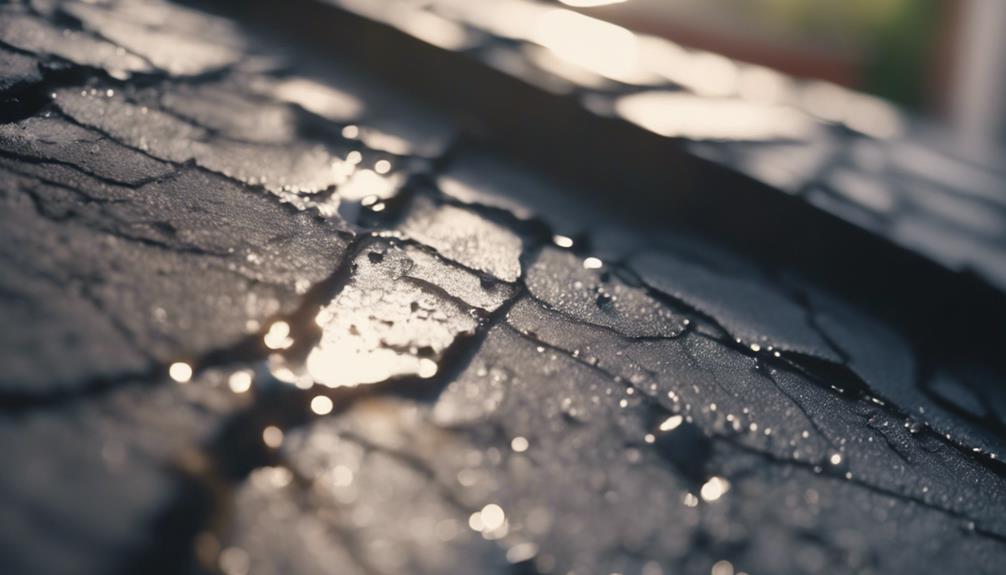
On a 2018 Crosshaven detached, the first 8 years look quiet. Fixings still hold. The zinc on the nail heads is already thinning where you cannot see it. We've found rust streaks by year 8-10 on harbour elevations. That is a job-log pattern, not a lab micron rate, and we will not dress it up as one.
So what actually fails first, and what does it cost?
What fails on a coastal Cork roof, and when?
In our 2026 logs the first real bill is a galvanised-to-A4 re-fix at year 8-12, €1,200-€2,400 including the 13.5% VAT that applies to qualifying roofing supply-and-install work (Revenue Commissioners). Miss that window and the next two jobs arrive early.
Prices below are Cork market ranges from our callouts, VAT included. Listed buildings and rear-access scaffold run higher. Slip one window and the next two cost more, not less.
| Year range | What needs doing | Cork 2026 cost (typical coastal detached) |
|---|---|---|
| Year 0-8 | Nothing visible. Annual gutter clear. | €80-€140 / year |
| Year 8-12 | Galvanised fixings to A4 stainless. Re-nail slates, replace gutter brackets, chimney straps. | €1,200-€2,400 |
| Year 12-18 | Mortar repoint chimney and ridge. NHL 3.5 or NHL 5, not OPC. | €1,400-€2,800 |
| Year 15-25 | Lead flashing thinning. Re-dress chimney apron with code 5 or code 6 lead. | €380-€2,400 |
| Year 25-40 | Timber decay if earlier work skipped. Rafter ends, batten replacement. | €2,400-€4,800 per elevation |
| Year 40+ | Full reroof if maintenance skipped. | €18,000-€32,000 |
| Every 3-5 years | Drone inspection (vs 7-10 inland). | €100 (refunded against repair) |
When do galvanised fixings fail on a coastal Cork roof?
We've found rust streaks under nail heads on south-west Crosshaven elevations around year 8-10. That is wear we photograph, not a published corrosion table. A4 fasteners are the 316-type grade with 2-3% molybdenum for chloride resistance (British Stainless Steel Association, ISO 3506).
Three symptoms show up in this order. They are easy to miss if you only look from the garden.
1. Rust streaks on slates below the nail heads
Steel under a spent zinc coat bleeds orange onto the slate. Streaks 50-100mm long. Easy to spot on a south-facing Crosshaven pitch. Not a leak yet. It is a guarantee the nails are past half-life.
2. Slipped slates after the next gale
The head snaps off the shank and the slate slides. On harbour south-westers we see this at 9-12 years, versus 25+ inland on the same slate. The slate is usually fine. The nail is not. That is the same small-job logic as a €150 inland tile hook-back, except here it repeats across the elevation.
3. Gutter bracket detachment
Galvanised brackets rot where they meet the fascia. The gutter sags, then lets go in the first heavy autumn rain. Water down the wall, into the fascia, behind the soffit, into the rafter ends. The cascade costs more than the bracket replacement by a long way.
The year 10 re-fix pass: swap every visible galvanised fixing for A4. Slate nails, gutter brackets, lead clips. Cork 2026 cost on a coastal detached: €1,200-€2,400. Stay on that cycle and you dodge the year-15 sequence below.
When does coastal chimney mortar start to fail?
OPC pointing on harbour stacks often needs a lime repoint by year 12-18 in our books. Irish conservation guidance classes NHL 3.5 as moderately hydraulic and NHL 5 as the severe-exposure grade (Department for Communities). Cement smears trap salt and blow the face off the brick.
Failed pointing lets water into the masonry, then the flue, then the bedroom wall. The usual year 12-18 job is a full stack repoint in NHL and a ridge re-bed. Single stack with scaffold: €1,400-€2,800. Ridge re-bed on a semi-D: €900-€1,800. Want the chimney scoped without a tower? That sits on the chimney services page.
How fast does salt wear out lead flashing?
Pinholes in chimney aprons show up on our drone stills at year 15-25 on exposed harbour stacks. Lead does not rust like steel. Salt just strips the protective carbonate faster, so the sheet thins sooner than the same code inland. We dress those aprons in code 5 rolled lead to BS EN 12588, not leftover code 4.
A single apron re-dress is €380-€650. Full chimney flashing (soakers, apron, back gutter) at year 25-30 is €1,400-€2,400. Inland, that full job often waits until year 50. Valley logic is the same as the lead valley repair page: thicker sheet, copper fixings, no patches on tired metal.
What happens if you skip the early coastal repairs?
Timber work starts when slipped slates and failed flashings have been wetting the wall plate for years. Per-elevation sister-and-treat is €2,400-€4,800 in 2026. A full coastal strip-and-reinstate can hit €18,000-€32,000. That is the expensive end of the cycle, and it is optional if you paid the earlier bills.
Keep the year 8-12 re-fix, the year 12-18 lime, and the year 15-25 lead work, and the rafters often make year 50. Skip them and year 25-30 is when we start cutting out soft ends. From what we've seen, that is the job people regret delaying.
Coastal Cork roof showing rust streaks or slipped slates?
Drone inspection is €100 fixed, refunded against any repair. Year 10 re-fix passes cost €1,200-€2,400. Waiting is how you buy an €18,000 reroof.
What should you spec on a new coastal Cork roof?
Specify A4 stainless throughout, NHL lime instead of OPC, and code 5 lead minimum. The fastener upgrade is the one that pays back first. A2 (304) is the inland grade. It is the wrong grade within a few kilometres of the harbour, which is why BSSA maps A4 to the 316 alloy for chloride work.
- Slate fixings: A4 (316-grade) stainless, not galvanised. Pays for itself in one re-fix avoided.
- Gutter brackets: stainless or marine-grade aluminium. Cheap plastic brackets on a south Crosshaven fascia do not last.
- Mortar: NHL 3.5 or NHL 5, not OPC. Dearer per bag. Longer life in salt air.
- Lead grade: code 5 minimum, code 6 on prominent stacks. The extra on a typical apron is €60-€90.
- Underlay: BBA-certified breather (Klober Permo Air or Cromar Vent 3). Bitumen felt rots in coastal humidity.
- Roofline: cellular PVC soffit, fascia and barge. We use UV-stable Freefoam-grade board for Cork sun hours.
Cobh, Crosshaven, Kinsale, East Ferry: what we see most
Different harbour towns fail in different ways. It depends on the wind they face and how much raw spray they take. This is the pattern on our sheets, not a guidebook average.
Cobh terraces and detached houses
Westerly harbour elevations take the brunt. Gutter and bargeboard failure is the usual call: gusts drive salt straight onto the fascia. Cellular PVC roofline at year 15-20 is the typical Cobh job.
Crosshaven semi-Ds
Slipped slates from dead galvanised nails, especially on the south-west pitch. Re-nail with A4 at year 10-14. About 1 in 3 Crosshaven semi-Ds we see at year 10 needs the full pass. The other two get it booked for year 12.
Kinsale period terraces
Lead flashing goes before the rest of the fabric. Code 6 re-dressings at year 25-30 are routine on the harbour streets. Conservation areas mean we write a method statement before we touch a listed stack in Kinsale.
East Ferry, Aghada, Whitegate
Exposed aspect, older detached stock. Whole-roof re-fix passes at year 10-15 are normal. Less period housing than Cobh. More 1980s-2000s galvanised throughout.
Roaringwater Bay villages
Same salt, more wind-driven moss because of Mizen rainfall. Soft-wash every 4-5 years is part of the schedule. That process sits on the Cork roof cleaning page.
How much does it actually cost over 40 years?
Stay-ahead work across years 8-25 lands at €8,000-€14,000 in our logs. Skip it and the reroof is €18,000-€32,000 in one hit. The Competition and Consumer Protection Commission lists wear and tear on the structure, including roof damage, as a standard buildings exclusion (CCPC). Salt erosion is maintenance. It is not a claim.
That stay-ahead band is about €350-€650 a year if you spread it. One modest repair callout a year. The drone check every 3-5 years is still €100.
Preventative work is roughly half the reactive bill, spread so you can plan it. Worth doing. Insurance Ireland put Éowyn at €301 million across 33,768 claims, 67% of them household, with an average household claim of €5,745. That money paid for storm hits. It did not pay for rusted nails.
Cork coastal suburbs we cover
We run this cycle on harbour and near-harbour stock: Cobh, Crosshaven, Kinsale, Carrigaline-south, Passage West, East Ferry, Aghada and Whitegate. Harbour-facing pitches in Douglas, Mahon and Blackrock get the same A4 spec when the elevation sees spray.
Frequently asked questions
Coastal Cork roof maintenance FAQs
How do I know if my Cork roof is in the coastal category?
If you can see the sea from the roofline, you are coastal. Within 5km on a west or south-west exposure counts too. Cobh, Crosshaven, Kinsale, East Ferry, Aghada and Whitegate are clearly coastal. Douglas, Mahon and Blackrock are borderline, but harbour-facing elevations still wear faster in our job logs.
Can I replace galvanised fixings with stainless before they fail?
Yes. A year-10 A4 re-fix on a typical coastal detached is €1,200-€2,400 including 13.5% VAT on qualifying roofing work. That is the job that stops the €3,000+ slipped-slate run we see at year 12-14 when galvanised nail heads shear.
What is wrong with cement mortar on a coastal Cork chimney?
OPC is rigid and alkali. Salt-wet cycles crack it and wash it out. NHL 3.5 is classed as moderately hydraulic and NHL 5 for severe exposure in Irish conservation guidance. On harbour stacks we spec NHL, not a cement smear.
Does Irish home insurance cover salt-erosion damage?
Usually no. The Competition and Consumer Protection Commission lists wear and tear on the structure, including roof damage, as a standard buildings exclusion. Storm damage is a different peril. Gradual corrosion is treated as maintenance, not a claim.
How often should a Cork coastal roof be inspected?
Every 3-5 years with a drone, versus 7-10 inland. The €100 inspection is refunded against repair. Catching rust streaks at year 8 is a re-fix. Catching them at year 16 is often flashing, mortar and loose slates on the same elevation.
What materials should I specify on a new coastal Cork roof?
A4 (316-type) stainless fixings throughout, NHL 3.5 or NHL 5 lime instead of OPC, code 5 lead minimum, and a BBA-certified breather membrane. A2 inland-grade fasteners are the wrong spec within a few kilometres of the harbour.