GRP Valley Replacement on a 1990s Ballincollig Semi-D: Job Log
A cracked valley trough on a 1990s Ballincollig semi-D was letting rain straight into the landing ceiling. We stripped the valley, checked the battens, fitted a preformed GRP trough and re-laid the tiles in two working days. This is the full job log with 2026 Cork rates.
Key Takeaways
- A valley strip-out and GRP trough replacement sits in the €420-€720 strip-back band, inc. VAT.
- This Ballincollig job took two working days: strip-out and dry-in on day one, trough and re-lay on day two.
- Scaffolding or edge protection, where a ladder will not do, adds €280-€650.
- GRP suits 1990s concrete-tile estate stock. Lead suits period terraces, and that is a different job at €1,800-€3,200.
What was wrong with the valley on this Ballincollig semi-D?
Ballincollig is late-20th-century estate housing: concrete tile and fibre-cement slate roofs, most of them built in a twenty-year burst. The estates along the Maglin and Coolroe roads are mature now, and the trees are mature with them. That leaf load lands in the valleys and gutters every autumn, and it is the starting point of half the valley problems we see in the area.
This house was a 1990s semi-D with a concrete-tile roof. The original valley was an early-generation fibreglass trough, thin by modern standards, and after thirty years it had cracked along the centreline. Autumn leaves had dammed behind the crack, ponding water against the fracture every time it rained. Names omitted with the homeowner's permission; everything else is from the job sheet.
The first symptom was a damp patch on the upstairs landing ceiling, directly below the valley line. By the time a valley shows itself inside the house, it has usually been leaking for weeks. The homeowner sent us photos on a Tuesday, we inspected Wednesday, and the written quote was in her inbox that evening.
What does a valley replacement cost in Cork in 2026?
In 2026 Cork pricing, a valley strip-out and GRP trough replacement on a standard semi-D sits in our strip-back band of €420-€720 including VAT, and takes half a day to two days depending on what the battens look like once the trough comes out. Qualifying roofing supply-and-install work carries 13.5% VAT (Revenue Commissioners), and every figure below includes it.
Access is the wildcard, as it is on every Cork roof job. A front-elevation valley on a ladder-accessible semi-D is the cheap end. A rear valley over a conservatory or an extension roof usually means scaffold or edge protection, and that is priced honestly as its own line.
| Work item | Cork price (2026, inc. VAT) | Time on roof |
|---|---|---|
| Valley strip-out, GRP trough, tile re-lay (this job) | €420-€720 | Half day to 2 days |
| Scaffolding or edge protection (when a ladder will not do) | +€280-€650 | Added on top |
| Multiple slipped tiles, one elevation (context) | €380-€650 | Half day |
| Lead valley replacement on a period terrace (context) | €1,800-€3,200 | 4-5 days |
Day one: how did the strip-out go?
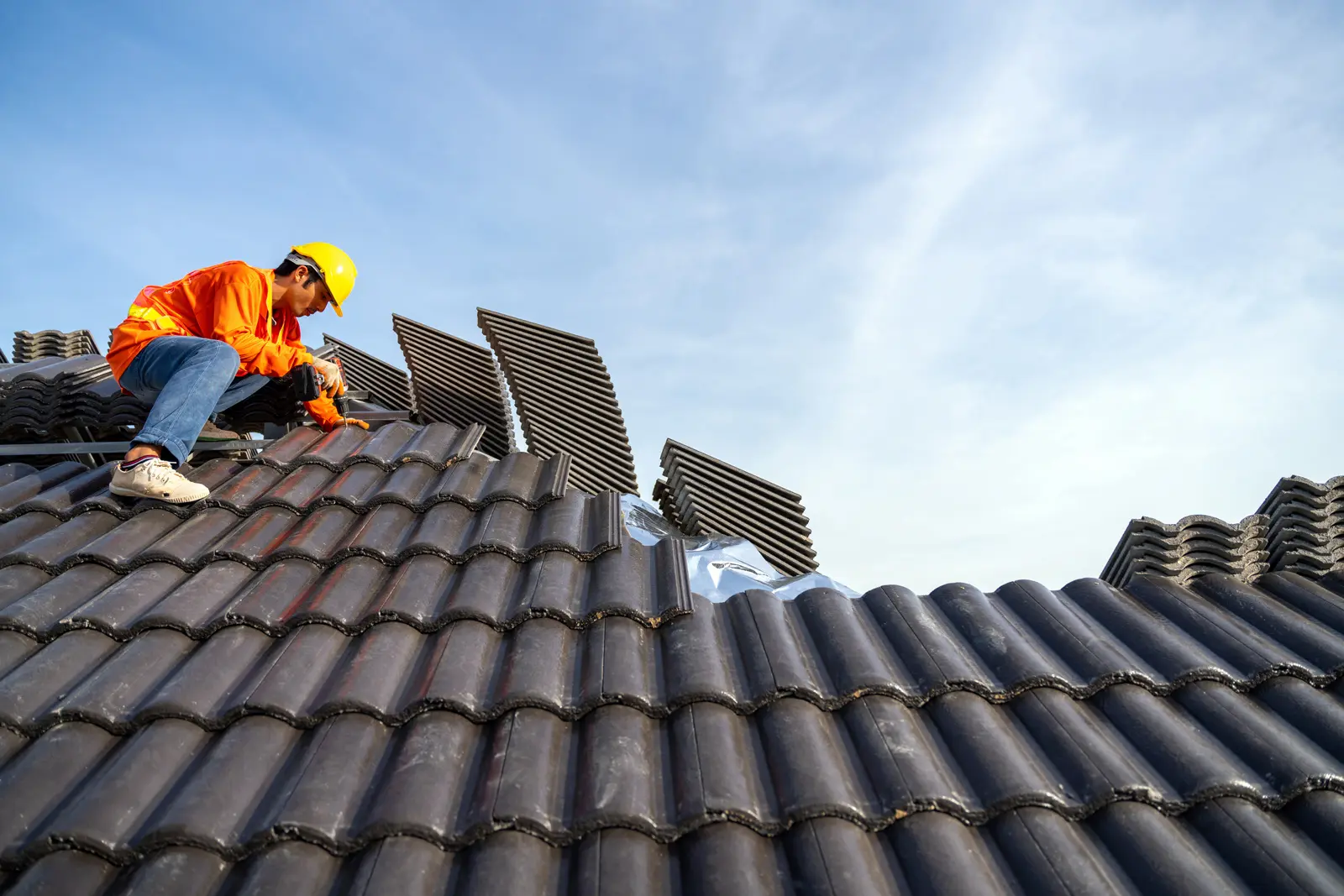
Day one, Thursday morning. Triple-extension ladder to the eaves, roof ladder up the slope, fall-arrest harness anchored at the ridge. This is a Safe Pass certified crew and every one of them is fall-arrest trained. Two slipped rows of concrete tiles came off either side of the valley, roughly 600mm back from the trough line, and were stacked on the scaffold-free side of the roof for re-use.
The old trough lifted out in three sections. Underneath, the news was decent: the battens were sound along most of the valley, with one softened length near the eaves where the leak had been running longest. We cut that section out and sistered in new treated timber. The underlay laps either side of the valley were tired, so new breathable membrane was dressed into the valley line under the trough position. Standard belt-and-braces work, all inside the quoted band.
By mid-afternoon the roof was dried-in for the night: membrane lapped, battens fixed, everything weatherproof if rain came. We never leave a stripped valley open overnight. That is the difference between a two-day job and an emergency.
Day two: what does the GRP install involve?
Day two, Friday. The preformed GRP valley trough sections went in from the eaves up, each length fixed and jointed per the manufacturer's spec, centreline left clear so water has an uninterrupted run to the gutter. GRP does not creep or split the way a thirty-year-old thin trough does, and it shrugs off the leaf dams that killed the original.
Then the tile re-lay. Sound original tiles went back, cut to the valley line where the profile needed it, each one re-nailed with 65mm copper clout nails at a few cents each. Four tiles had broken in strip-out or were already cracked, so four replacement Sandtoft Standard concrete tiles at €15-€25 each from Roof Tile Supplies in Little Island went in. We always overspec fixings: copper outlasts the tile.
The last hour was the water test, the photo report, and the tidy. Hose down the valley, check the attic side dry, photograph every stage for the homeowner's records and her guarantee file. Off the roof by mid-afternoon, two working days start to finish.

What the homeowner said on the Friday evening: "Two days, exactly what the quote said, and the photos show every bit of it. I wish the last crowd had worked like that." Her invoice matched the written quote to the euro.
Valley leak in Ballincollig? Send a photo, get a fixed price in 24h.
Free written quote inside 24 to 48 hours, no call-out fee. Michael personally reviews every quote before it goes out. 20-year written workmanship guarantee.
Why GRP on a 1990s estate roof, and when is lead the right answer?
Material choice follows the house. A 1990s Ballincollig semi-D was built around concrete tile and modern underlay, and a preformed GRP trough suits that construction: it matches the tile profile, it installs fast, it carries no scrap value to attract theft, and the material cost keeps the whole job inside the strip-back band. For this stock, GRP is the honest recommendation.
Period housing is a different conversation. A 1930s terrace was built around lead work, and the detailing has to match the house. When we do those jobs, we do them in lead, and the full breakdown of a real €2,850 Turner's Cross terrace job is in our lead valley repair job log. If you are not sure which stock your house is, a photo tells us in seconds, and our roof valley repair and replacement service covers both materials across Cork.
What paperwork and guarantee do you get with the job?
Every job over €100 carries our 20-year written workmanship guarantee, issued as a PDF certificate and transferable with the property if you sell. Sub-€100 jobs carry 12 months. The invoice shows the 13.5% VAT breakdown, and the photo report documents what is under the tiles, the part you will never see again.
We are fully insured for the work: €6,500,000 public liability through AXA (Tradesman Policy 12/28/150946921). Keystone Roofing & Construction Ltd, CRO 752205. If a valley we have replaced fails under normal conditions inside the guarantee term, we come back and put it right at no charge. That is what a written quote from a registered company buys that a cash job never will.
Frequently asked questions
GRP valley replacement FAQs
How much does GRP valley replacement cost in Cork?
In our 2026 Cork job logs, a valley strip-out and GRP trough replacement on a standard semi-D sits in the strip-back band of €420-€720 including VAT, and typically takes two working days. If a ladder will not give safe access, scaffolding or edge protection adds €280-€650 on top. Lead valley replacement on a period terrace is a bigger job at €1,800-€3,200.
Why GRP instead of lead on a 1990s estate roof?
GRP suits 1990s concrete-tile estate stock. The troughs are preformed to suit the tile profile, they go in fast, they have no scrap value to attract theft, and the material cost keeps the job inside the strip-back price band. Lead is the right answer on period terraces where the roof was built around lead work and the detailing needs to match.
How long does a valley replacement take?
Two working days on a typical Ballincollig semi-D. Day one is strip-out, batten check and a weatherproof dry-in overnight. Day two is the GRP trough install and the tile re-lay either side. Heavy rain can push day two back, because we will not re-lay tiles onto a wet deck.
Can a cracked valley be patched instead of replaced?
A centreline crack in a 30-year-old valley trough is not a patch job. Sealant over a moving crack buys a season at best, and the leak usually returns at the first heavy rain. We will tell you honestly when a patch is worth doing, but on a cracked trough the strip-out and replacement is the cheaper answer over five years.
Does a valley replacement come with a guarantee?
Yes. Every Roofers Cork City job over €100 carries a 20-year written workmanship guarantee, issued as a PDF certificate after the job and transferable with the property if you sell. The certificate covers our installation work, and the photo report shows exactly what was done under the tiles.