We Drone-Inspected 5 Douglas Roofs: What 1960s to 1990s Estates Hide
Five Douglas roofs, five drone flights, one clear pattern: the defects costing owners money are the ones you cannot see from the ground. Every survey below is real, from 1960s to 1990s estate stock across Douglas, with names and house numbers stripped out.
Key Takeaways
- Five Douglas surveys, five roofs with defects invisible from the ground.
- Most common find: perished ridge mortar on 1970s to 1990s tile.
- A drone survey is €100 fixed, photo report and written findings included.
- Every defect found was a small job at survey stage. Left another two winters, most become strip-backs.
Why drone five roofs in the same estate stock?
Douglas is south-side Cork: 1960s to 1990s estates in the main, some older slate near the village, and mature trees loading the gutters along Douglas Road and Well Road. The houses were built in the same decades, with the same tile profiles and the same mortar mixes. When one roof on a road starts slipping tiles, the neighbours' roofs are usually within a few years of the same thing.
These five surveys came from ordinary bookings: two owners who had a tile on the lawn, one pre-purchase check, one insurance query after a storm, and one homeowner who just wanted to know what condition the roof was in before winter. No cherry-picking. This is what average Douglas stock looks like from 40 feet up.
What did the five Douglas surveys find?
Roof 1, 1970s semi-D off Douglas Road. Perished ridge mortar along six metres of the main ridge, two sections already hollow-sounding. No leaks yet. This is the single most common find on 1970s tile in Cork: the mortar reaches the end of its life years before the tiles do. A re-bed at survey stage is a small, clean job.
Roof 2, 1980s semi-D near the village. Three slipped concrete tiles sitting in the laps below their original line. From the ground the roof looked perfect because the tiles had slid into the overlap and wedged. The felt underneath was intact, which made this a hook-back and re-nail, the same class of small repair as our €150 Douglas job log. One more winter of movement and those tiles drop.
Roof 3, 1990s detached near Maryborough. Both valleys blocked with leaf sludge and broken tile fragments. Water was tracking sideways under the valley lining on the drone footage, staining the sarking felt at the edges. The owner had no internal damp yet. A valley clear and a check of the lining fixed it; a blocked valley left through winter is how underlay rots.
Roof 4, 1960s terrace, pre-purchase survey. Lifted lead apron flashing at the chimney, plus a historic patch done in roof cement that had cracked and separated. The buyers nearly missed it: their standard survey noted the roof as "appears serviceable from ground level". The drone photos went into the sale negotiation. If you are at that stage, the drone roof inspection is €100 fixed and the photo set is yours to keep either way.
Roof 5, 1980s bungalow toward Rochestown. Early nail sickness across the south elevation: dozens of tile heads sitting proud where the original galvanised nails have thinned. Not an emergency, but it is the beginning of the pattern that ends with tiles on the lawn after every westerly. Flagged for a monitored re-fix programme rather than a panic strip.

What does the drone see that you cannot?
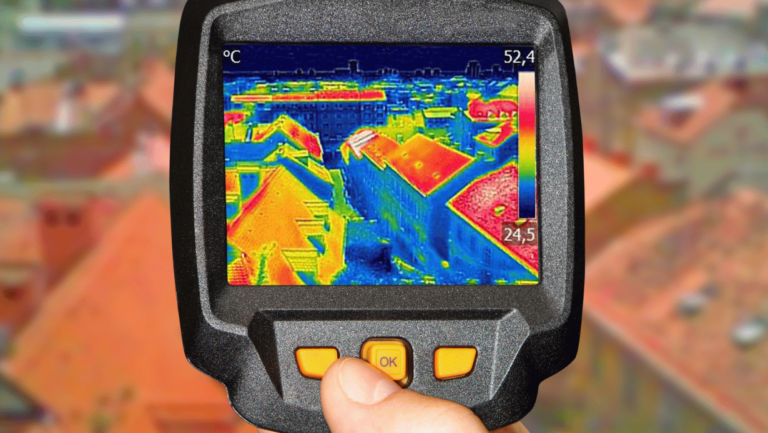
From the ground you see the front elevation at an angle, in whatever light the evening gives you. From the air we read the whole covering: every ridge joint, both valley runs, the chimney shoulders, the lead lines, the gutter falls, and the tile heads on the slopes you never see at all. Cracked tiles hiding under lichen, slipped tiles wedged in the laps, perished mortar that still looks pointed from below: all of it shows.
What the drone cannot do is lift a tile or press a batten. If the photos suggest torn felt or soft timber, we say so and the next step is a hands-on check, priced separately and quoted in writing. About 1 in 4 of our surveys ends with us recommending no immediate work at all, and the report says that too.
Own a 1960s-1990s Douglas roof? See it properly for €100.
Fixed-price drone survey, full photo set, written findings. Michael personally reviews every report before it goes out. If repair work follows, the €100 comes off the job.
What should Douglas owners do with this?
If your roof is 25 years old or more and has never been looked at from above, book the survey before storm season rather than after it. The five defects above were all small money at survey stage: a ridge re-bed section, a hook-back, a valley clear, a flashing re-dress. The same defects two winters later are the jobs that need scaffold and strip-back pricing.
We cover Douglas and the south-side suburbs for surveys every week. For the repair side once you know what the roof needs, our Douglas roofers page has the service detail and the guarantee terms, and the Douglas €150 repair breakdown shows what the smallest class of fix looks like line by line.
Frequently asked questions
Douglas drone survey FAQs
How much is a drone roof survey in Douglas?
€100 fixed, including VAT. That covers the flight, the full photo set, and a written findings report with our recommendations. If you go ahead with repair work, the €100 comes off the job price.
Can a drone survey replace going up on the roof?
For diagnosis, almost always. The drone reads tile condition, ridge mortar, valleys, flashing lines and gutter runs in close-up. What it cannot do is lift a tile to check the felt, or press on a batten. If the photos show something that needs a hands-on check, we say so and price that separately.
What do 1960s to 1990s Douglas estates usually hide?
Across the five surveys in this roundup: perished ridge mortar, slipped tiles sitting in the laps, blocked valleys under leaf load, lifted lead aprons at chimneys, and early nail sickness on the oldest concrete tile. None of it is visible from the ground. All of it is cheap to fix early and expensive to fix late.
Should I get a drone survey before buying a house in Douglas?
Yes, if the roof is over 20 years old or you can see any unevenness from the road. A standard pre-purchase survey notes the roof from ground level. A €100 drone survey shows you the actual covering, so a €400 ridge re-bed does not become a surprise in your first winter.
Do I need to be home for a drone roof survey?
No, as long as we have permission and access to the rear garden or a clear flight line. Most Douglas surveys take 20 to 30 minutes on site. The photo report lands in your inbox the same day, with the written findings the day after.