Buying a House in Cobh? 7 Roof Red Flags on Harbour Terraces
Cobh's harbour terraces are some of the most distinctive housing stock in Cork: natural slate roofs, cast-iron gutters, and streets that climb straight up from the water. Before you sign on one, there are seven roof checks I walk every buyer through. Most of them take ten minutes from the pavement with a phone camera.
Key Takeaways
- Cobh harbour terraces are mostly natural slate with cast-iron rainwater goods, and marine air shortens component life.
- A slipped slate row, rusted cast-iron gutter or patched flashing is a negotiation point, not a deal-breaker, if you know about it before signing.
- Hillside access adds edge protection and smaller load-ins to every future repair. Budget for it from day one.
- A €100 fixed-price drone survey shows what the pavement cannot, before contracts, not after.
Why is buying a Cobh harbour terrace different from buying inland?
Cobh is hillside harbour housing. The terraces step up from the quay in rows, most of them roofed in natural slate with cast-iron gutters and downpipes, and many of them take marine air off the harbour all year. That combination is what separates a Cobh purchase from an inland estate semi in Ballincollig or Wilton. The materials are better and last longer, but the environment is harder on every fixing, joint and flashing.
Salt air works on a predictable schedule. On Cobh, Crosshaven and Kinsale roofs, we plan component replacement on an 8 to 12 year cycle because galvanised fixings, mortar and lead all age faster within reach of the sea. I broke that cycle down component by component in our coastal Cork salt erosion guide. As a buyer, you do not need the whole schedule. You need to know where the roof you're buying sits on it.
Here is the part that catches buyers out. A standard building survey is a broad structural check, and on a steep terrace the roof often gets one line: "appears serviceable." That line can hide a valley that leaks into the party wall, a chimney apron held together with mastic, or gutters one winter from falling off the fascia. The roof is the single most expensive element of the house to put right. It deserves its own ten minutes.
What are the 7 roof red flags to check before you sign?
Every check below can be done from the pavement or the back garden with your phone's zoom. None of them require a ladder. If two or more come back positive, that is your cue to get the roof properly surveyed before contracts, not after.
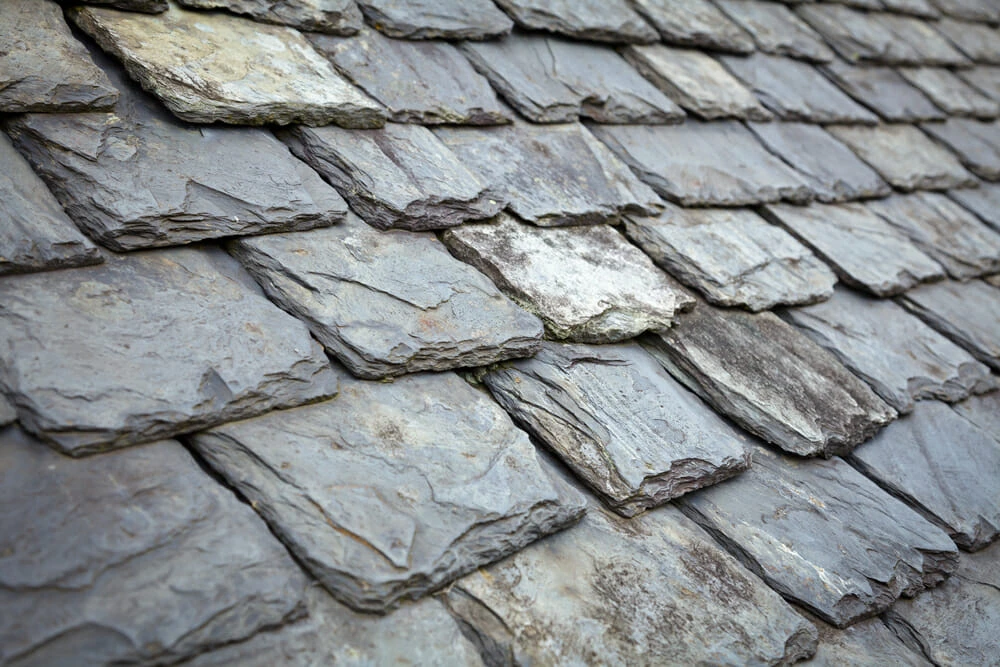
- Slipped or missing natural slate rows. Look along each elevation for gaps, slates sitting proud of their course, or patches of slightly different colour. That colour difference is where newer slate has been slipped into an old repair. Natural slate itself lasts generations. The nails holding it do not, and scattered slips across one elevation are the classic sign of nail sickness. One slipped slate is trivial. A pattern of slips is a re-fix conversation.
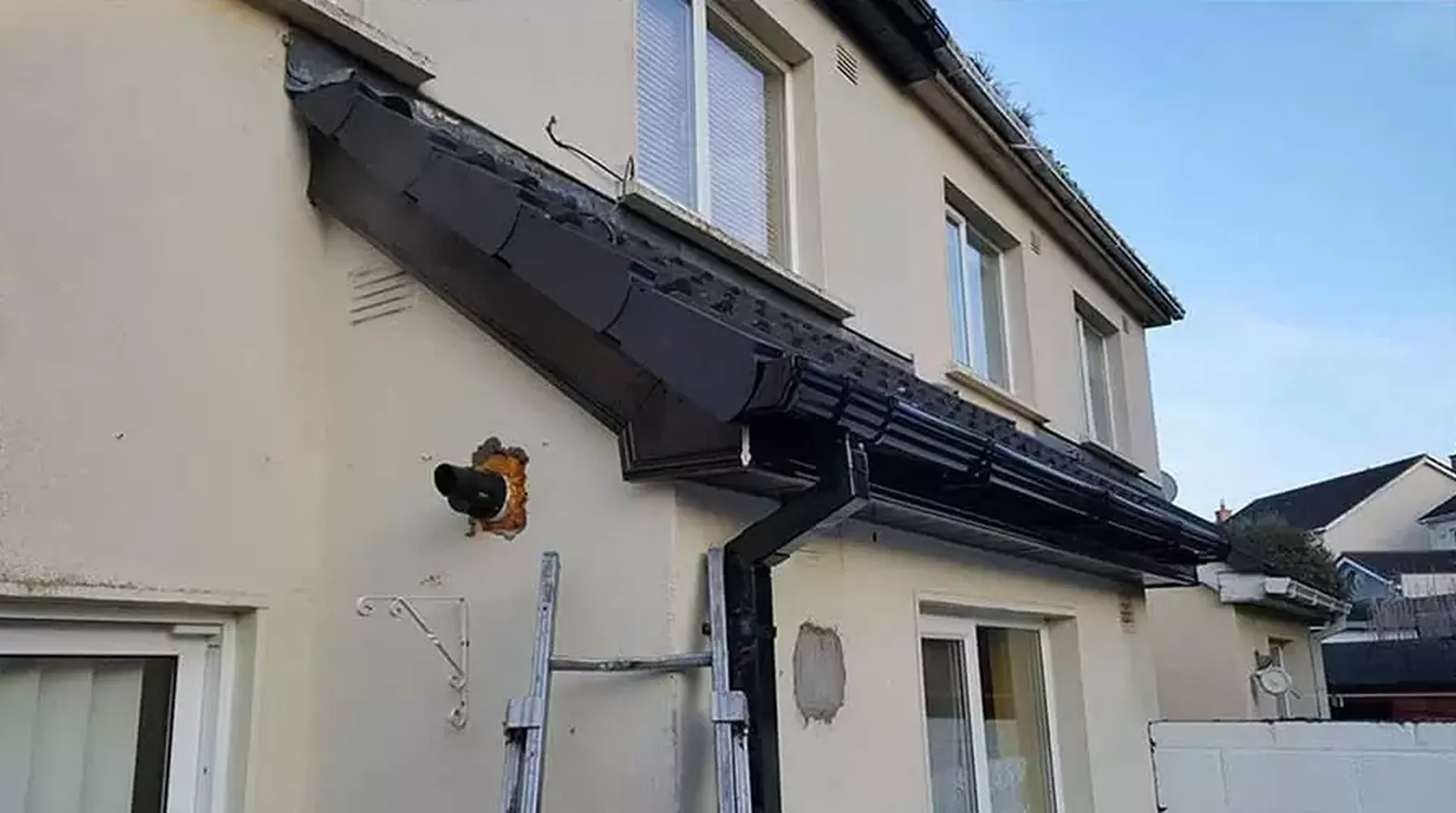
- Cast-iron gutters and downpipes at the end of their life. Check for rust streaks running down the wall below the gutter line, drips at the joints, flaking paint with orange underneath, and plants growing out of the channel. Look up at the hopper heads and downpipes too, not just the gutter run. Sound cast iron is repairable and worth keeping on a period terrace. Cracked sections with brackets rusted off the fascia are a replacement job, and you want that priced before you agree the sale.
- Hillside access, and what it does to every future bill. Stand in the street and look at how a roofer would actually get to the roof. Steep Cobh streets mean extra edge protection, scaffold built on a slope, and smaller load-ins because materials cannot be craned to the ridge in one drop. We price that honestly as a visible line item. A typical harbour-terrace flashing rebuild is two days of work once the scaffold is up. If access looks awkward from the ground, every repair you ever commission on that house will carry the premium.
- Chimney lead and flaunching. Terrace chimneys are usually shared stacks on the party wall, which makes their condition your problem and the neighbour's at the same time. Zoom in on the lead apron where the stack meets the roof slope, the back gutter behind it, and the mortar flaunching around the chimney pots. Lifted lead, cracked flaunching or a smear of black mastic where lead should be means water has a route in. Chimney leaks travel along timbers and show up rooms away from the actual entry point.
- Valley condition. Many Cobh terraces hide their valleys behind front parapets or in the junction between the main roof and a rear return, so you cannot see them from the street at all. Ask the agent directly whether any valley work has been done. Inside the house, check the upstairs ceilings near party walls and chimney breasts for old staining. A stained ring that has dried out still tells you the valley or flashing leaked at some point, and nobody fixed the cause.
- Moss and lichen as a drainage symptom. Moss on a Cobh roof is not automatically a problem, but heavy growth on the north-facing slope means that slope stays wet longer than it should. That usually traces back to poor drainage, oversailing trees, or gutters that are not carrying water away. Treat moss as a question rather than an answer: why is this roof staying damp? The reply often leads you back to flag two.
- Patched flashing and mismatched repairs. Odd-coloured lead, roofing felt dressed over a junction, or mastic smeared along a wall abutment all tell the same story: the house leaked, and the leak was stopped cheaply rather than properly. Ask what roof work has been done and ask for the paperwork. Invoices and guarantee certificates exist for proper jobs. If the seller cannot produce any, treat every visible patch as unverified and have it opened up and priced.
What do these red flags actually cost a buyer?
None of the seven flags is a reason to walk away from a house you want. Every one of them is a reason to renegotiate, or at least to budget honestly. The mistake buyers make is not buying a terrace with roof problems. It is finding out about the problems after the contracts are signed, when the cost is theirs alone.
The pattern I see on Cobh purchases is consistent. The buyer's survey says the roof appears serviceable. Six months later a storm puts three slates in the garden, the roofer who comes out finds nail sickness across the whole elevation, and the repair that would have been a negotiating point in June is an unbudgeted bill in January. The house did not change. The information did.
Access is the other number buyers forget. Two identical terraces can carry different repair costs for the rest of your ownership because one fronts a flat street and the other sits halfway up a hill with a four-metre return drop at the back. Edge protection, scaffold on a slope and smaller load-ins are real, recurring costs on hillside Cobh houses. Factor them into what you offer, not just what you repair.
What one buyer told me after the report landed: "The drone photos paid for the survey a hundred times over. We knocked the flashing rebuild off the agreed price before signing." That is the whole point of checking early. A red flag found before contracts is leverage. The same flag found after is a bill.
Buying in Cobh? Get the roof checked before you sign.
Fixed-price drone survey, €100, with a written photo report you can take into price negotiations. Michael personally reviews every report before it goes out.
Should you get a drone survey before signing?
If you take one thing from this list, make it this. A pre-purchase drone roof inspection is €100 fixed, takes under an hour, and shows the parts of a harbour-terrace roof that nobody can see from the pavement: the ridge line, the valleys behind parapets, the chimney aprons, the back gutters and the true state of the slate courses.
You get a written photo report, not a verbal summary. That report is what turns a red flag into a negotiation. An agent can argue with a buyer's opinion. They cannot argue with a close-up photograph of a lifted chimney apron taken the previous Tuesday.
And if the survey comes back clean, you have something almost as valuable: a dated photographic baseline of the roof on the day you bought it. When something changes three winters from now, you will know it changed.
What if the survey finds one of these flags?
You have three options, and none of them is panic. First, negotiate: a written scope of works with a fixed price gives you an exact figure to take off the agreed sale price or to ask the seller to fix before completion. Second, budget: if the work is minor, agree the sale knowing precisely what the first repair will cost. Third, walk away, but only when the survey shows structural movement or rot, which is rare on these terraces. Slate, lead and cast iron are all fixable.
Ask the seller for paperwork on any past roof work before you decide. Our own jobs over €100 carry a 20-year written workmanship guarantee as a PDF certificate, and it is transferable with the property, so a seller who used us can hand you that cover with the deeds. Other roofers offer similar terms. No paperwork means the repair is unverified, and unverified repairs get priced accordingly.
If the survey does find work that needs doing after you move in, the crew on our roofers in Cobh page handle natural slate, cast-iron rainwater goods and hillside access across the harbour town every week. Written quote within 24 to 48 hours of the survey, same-day response if the roof is actively leaking.
Frequently asked questions
Buying a house in Cobh: roof FAQs
Should I get a roof survey before buying a house in Cobh?
Yes. A standard building survey often assesses the roof from ground level or a ladder, and harbour-terrace roofs hide their problems at the ridge, the valleys and behind parapets. A fixed-price drone survey shows all of it before contracts are signed. Ours is €100 fixed and includes a written photo report you can use in price negotiations.
What is the most common roof problem on Cobh harbour terraces?
Slipped natural slate from failed fixings, and cast-iron gutters at the end of their working life. The slate itself often has decades left in it. The nails and the rainwater goods are what give out first on a hillside terrace that takes marine air all year.
Do cast-iron gutters need to be replaced when I buy a Cobh terrace?
Not automatically. Sound cast iron can be repaired, re-sealed at the joints and repainted. What matters is whether sections are cracked through, whether the brackets have rusted off the fascia, and whether the downpipes and hopper heads still run clear. Have it assessed before you budget for either repair or replacement.
Does hillside access make Cobh roof repairs more expensive?
Yes, and any honest roofer prices it as a visible line item. Steep harbour streets mean extra edge protection, scaffolding on a slope, and smaller load-ins because materials cannot be craned to the ridge in one drop. A typical harbour-terrace flashing rebuild is two days once the scaffold is up. The repair itself is usually straightforward. The access is what you pay for.
Is a roofer's workmanship guarantee transferable to a new owner?
Ours is. Every Roofers Cork City job over €100 carries a 20-year written workmanship guarantee, issued as a PDF certificate and transferable with the property if it sells. If you are buying a Cobh terrace and the seller had roof work done, ask for the certificate. If there is no paperwork, treat the repair as unverified and have it checked.